 To very, very broadly paraphrase Paul Collins, the spots you don’t visit in your first few weeks of living in a new area become places you never go; they seem oddly out of your orbit. That has been the case for us with McGrath’s, a pub that is mere steps from home, but one we had previously only had one brief visit into, in between Covid lockdowns. That timing, no doubt, played a role, as did the fact that other pubs nearby either had a reliable children’s menu or had re-opened under new management, so there was a built-in excuse to visit those. And as there was no independent beer option on that single visit, there was no compelling reason to go back, especially when Juno and The Cat & Cage have some more compelling (if not inexpensive) choices for our fellow Drumcondra-area neighbours.
 But having been reliably informed by someone who knows that there should be some local pints at McGrath’s – and at a reasonable-for-Dublin price – we paid another visit. But before we get to the drinks, it’s a spot that requires a bit more descriptive detail. Unlike many of its nearby counterparts, the interior (and, indeed, exterior, with its neon ‘LOUNGE’ sign) are not the more common-or-garden late 19th century pub style, nor its more modernised descendant, though the structure itself was built in the 19th century as housing. It became a pub at some point before 1938, when it took its current name, and the mostly-light wood and light fixtures look like it was last meaningfully refreshed in the 1960s. This adds a certain time-capsule charm, and it is certainly unpretentious.
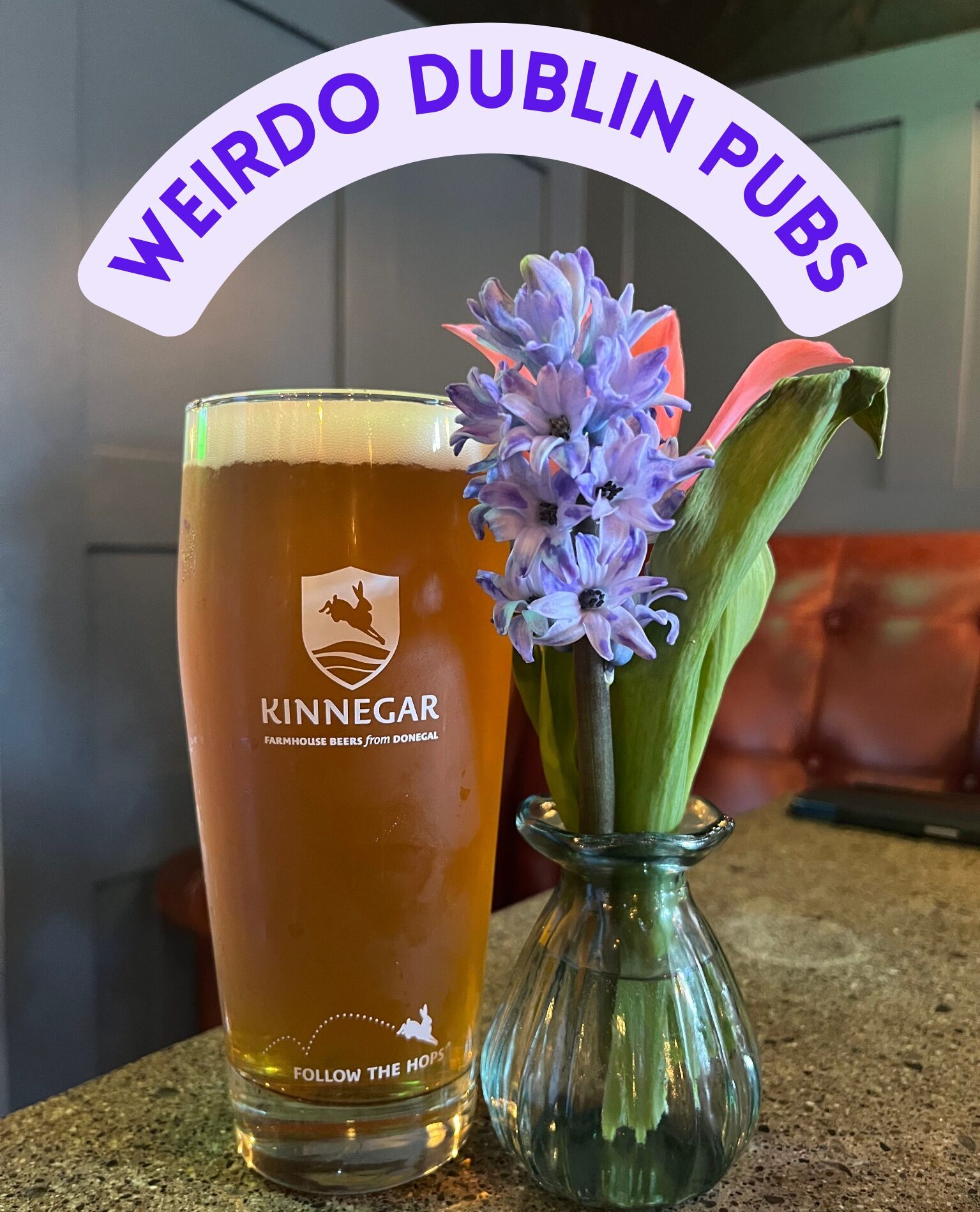
 Perhaps the real draw, though, is the Kinnegar tap – a reliable Scraggy Bay, and for a mere €7.20; this is an entire euro cheaper than you’ll find it at some nearby pubs, so certainly noteworthy. There’s also Galway Hooker, but we’ve never been fans of any of their beers (even before their rather confusing recent history of ownership and recipe changes), so no need to explore that option. And while we haven’t been in the pub much before this occasion, the attached off-license is quite a useful one, with a nice selection of beers from local stalwarts like Hope and Rascals. Again, it’s something of a time-warp with the need to be buzzed in the door, but for a small shop, it has a pleasantly surprising range of choices.
We may avail ourselves of the ‘affordable’ Scraggy more often in future, now that we are aware of it…
Where: Drumcondra Road Lower, Drumcondra, Dublin, D09 X5P6
Access from the city centre: 1, 13, 16, 44, 122, F1, F2, F3; 35ish minute walk
Food: Scampi fries, crisps
Sport: Golf, football, GAA, etc.
TVs: In various spots around the pub and in the lounge
Music: Just the sport on our visit
Family-friendliness: A fair few kids in on a weekend afternoon
Pub-crawl-ability: Medium – there are other pubs within a shortish walk, with Juno, Quinn’s, Phil Ryan’s The Hogan Stand, Fagan’s and Gill’s Corner House nearby, though it’s also worth it to head to The Bald Eagle, The Brian Boru or The Cat & Cage
Local sites of note: Croke Park, Mater Hospital, Royal Canal
Haunted: Does light phrogging count?
Other notes: Although food does come up if you search, there is no evidence of a current non-salty snack food offering
Socials: Instagram
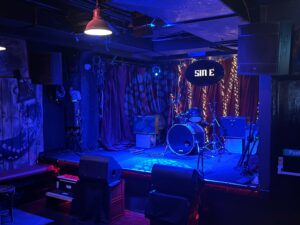 Part music venue, part dive bar,
 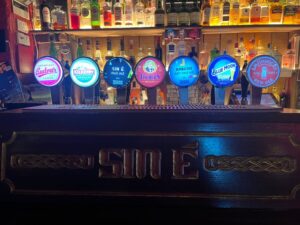 And while the formal stage at the back of the main floor makes it feel more venue than pub, it’s got a rather respectable beer lineup, including its own beer from Trouble, as well as the more-common Ambush. There is also a Kilkenny tap – it’s no longer so lesser-spotted around Dublin – and the other usual suspects.
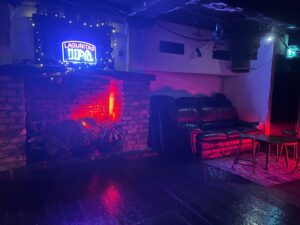 But downstairs, where there are more seating and stage options, is where there’s a bit of a slightly eerie historic atmosphere; the stone walls, low lighting, cool temperature and quiet (during the afternoon – not, of course, so much at night during a gig) do suggest, even if it’s ever-so-slightly, The Unseen. We couldn’t find any good ghost stories, but they do put on some good Halloween shows, so it’s worth keeping an eye out for that, even if the folklore isn’t forthcoming.
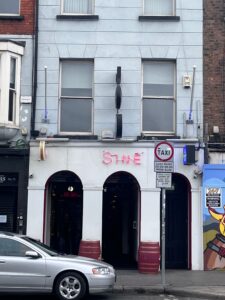 While you’re unlikely to find us out and about at one of their 2 am events, in a city with an ever-shrinking number of creative and arts spaces for both emerging and established artists, it’s handy to have one with a real personality; being in a 300-ish year old building is a bonus.
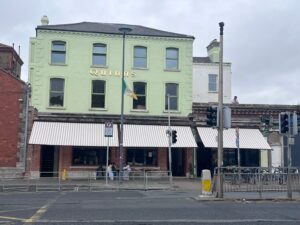 In one of the longest-awaited (or, for the more cynical among you, most-doubted-to-ever-happen) Dublin pub re-openings,
  Originally slated to open ‘for Paddy’s Day’ about 2 years ago, it’s finally been close enough to done to start getting customers in – just in time for the All-Ireland Final which saw Mayo
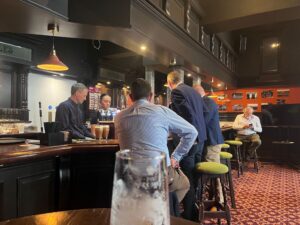
 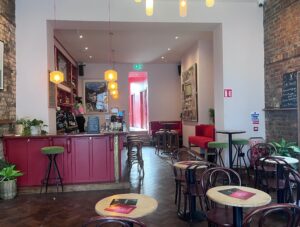 So what we do see now is by no means the finished product, but as a local resident, it was Important to go check out what was on offer, once it was possible to do so. Quinn’s is a very large building by local standards, and the new owners have divided up what was the ground-floor bar into a café – opening during the day for coffees, etc, and as a wine bar in the evenings – with the other side maintaining a more traditionally ‘pubby’ feel. This is probably a very sensible approach, especially for out-of-season operations, but it does make that ‘pub’ side seem a bit small (if comfortably furnished). The theme is, of course, GAA, and there will also be hotel rooms upstairs, all decorated in different county colours, so that continues throughout.
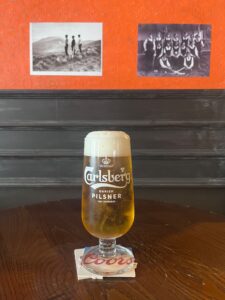 Perhaps most surprisingly – and this is a pleasant surprise – there’s even a local independent beer on offer. This is not a given at most of the more ‘sporty’ pubs in Dublin, so it was great to see a Whiplash tap, even if it wasn’t up and running yet on our visit. The Carlsberg, however, tasted just as fresh as it does in Copenhagen, so clearly, considerable work has gone into completely reworking the tap lines (and plumbing in general – no smells!). There is Beamish as well as Guinness, so if Cork are playing, their fans will be well-catered to.
 Is it a pub, or is it a bar?
 This Dame Street spot was formerly home to Berlin Bar, which was
  And while it’s *slightly* confusing where you need to go to order your slice of Detroit-style pizza by Doom Slice as there is an indoor hatch that might or might not be serving, plus an outdoor one, it’s easily sorted out. It is quite a tasty slice, it must be said, and it’s one of the cheaper options for food and a pint in Dublin (without the Instagram-driven queue for Bambino – why stand outside when you can sit inside with your slice and beer)?
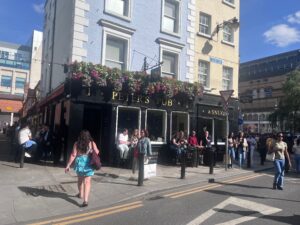 A quick entry, this week – perhaps fitting, as it’s a tiny pub, but one that’s right in the centre of things. Indeed, it would be hard for Peter’s Pub to be much more central – just off Stephen’s Green, and steps from the Gaiety Theatre, it occupies a busy corner-ish spot.
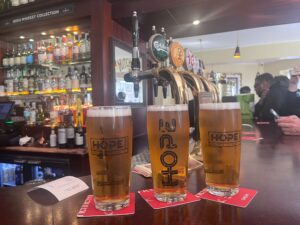 And there are some much-needed
  It’s finally here!
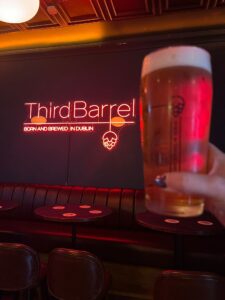 And while it’s a different situation here, it’s still effectively impossible for a brewery to simply open a taproom; there’s a good recent discussion of the local state of play with Friend of the Blog Sarah (now ex-of Rye River Brewing, and off to new adventures) and Galway Bay Brewing’s Marco on
  Most importantly, though, much of the
 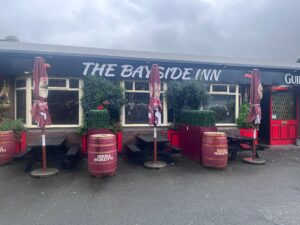 It’s true we have a tendency to stick to pubs that are north of the Liffey, but we rarely venture out into the true suburbs – we are usually still within reasonable walking distance of Dublin city centre. This week, however, we take a longish bus ride out to the wilds of Kilbarrack to visit The Bayside Inn.
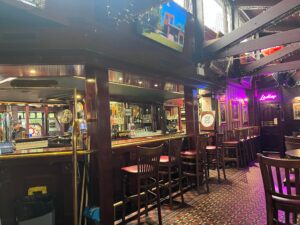 Indeed, The Bayside Inn is so ‘of this place’ that it sits in the car park in the shopping centre, next to the church – all of a thoroughly 1970s vintage. One gets the feeling that not much has changed in the internal décor since the doors opened in 1974 (per the painted gold letters on the half-glass doors. Some fairy lights have been added to the open rafters, and a taxidermied bear is observing proceedings from above, but beyond the TV screens, we doubt that much has been altered. It might not be a perfect time capsule from the 1970s, but it’s also not terribly far off. And while there may be very slight visual and architectural similarities to this particular vintage of ‘estate pubs’ on the Neighbouring Island, the feeling is still very much ‘neighbourhood Dublin pub’ – it doesn’t have a ‘locals only’ vibe, even if it does have plenty of regulars (which can, of course, be said of many estate pubs in Britain, even if that’s not the popular reputation).
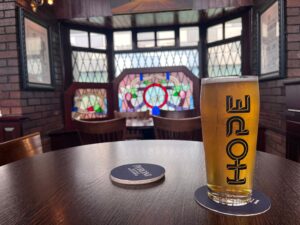 And some things have changed with the times; there is good support for local independent beer here, with fresh selections from Hope, brewed under 2 km away at Howth Junction, on tap. Yes, there’s Guinness and all the other usual options, but it’s nice to see smaller local businesses giving each other a helping hand. We confess we’ve only made it up here when we’ve been visiting local friends (or doing a spot of cat-sitting), but we’ve always felt very welcome here, even as only occasional drop-ins.
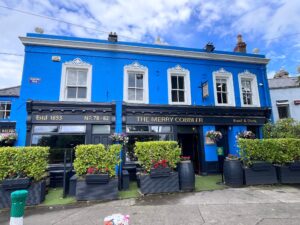 This week, we make a trip not only south of the Liffey, but nearly into the heart of Dublin 4, with a visit to
 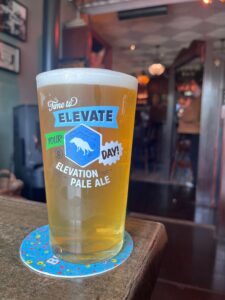 It’s very much a neighbourhood spot, welcoming local families, game day regulars and guests – you can even stay in the pub. And while its renovation of the past decade means it’s got a bit more polished wood and stained glass than many of its counterparts on the other side of the river, it never feels snobby. There are some lovely snugs – again, more stained glass – and various different spaces to spread out around this large pub. Local independent beers are well-represented (from Trouble and Wicklow Wolf on this most recent visit, though we’ve also seen Hope in the past), but this is another spot where the stout enthusiast can do the full Guinness–Beamish–Murphy’s taste test.
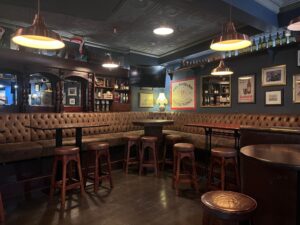 We will eventually do a ‘Best Pubs for the Aviva’ roundup to complement our ‘
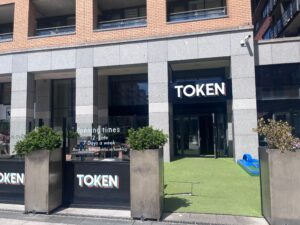 This week, we are visiting more of an event venue than a pub, but needs must.
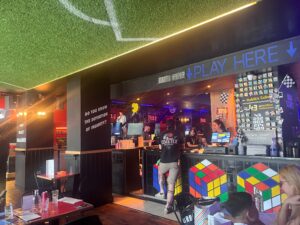 And it may be that this vibe is a direct result of this new space: surrounded by bland offices and corporate apartments, it now feels like an after work ‘enforced fun’ spot for company meetings. The prices certainly fall into the ‘someone else is paying’ category with an ambitiously-priced pint of Scraggy Bay on offer for €8.20 (and a service charge added to food orders, despite it being relatively difficult to find someone to take your payment when you want to leave, even at the bar).
 Although it’s part of the same ownership group as
  It’s time for another pub re-brand, but this one does seem to be purely a name swap and a bit of a paint job, rather than anything more drastic. We speak, of course, of
  The Read family did run their business from what is now
  In truth, beyond some more sober colour choices and nods to both the Read family and a portrait of Michael Collins, little has changed – but this is no bad thing. The more recent trend around Dublin has been for pubs to remove their independent beer taps when they renovate, but happily, Thomas Read’s remains a Galway Bay Brewing pub, so there is the usual range of their beers and a few guests, although there are, perhaps, a few more Guinness and Heineken taps than there used to be.
  And it’s a change that makes sense from a tourism point of view: if we’re being honest,