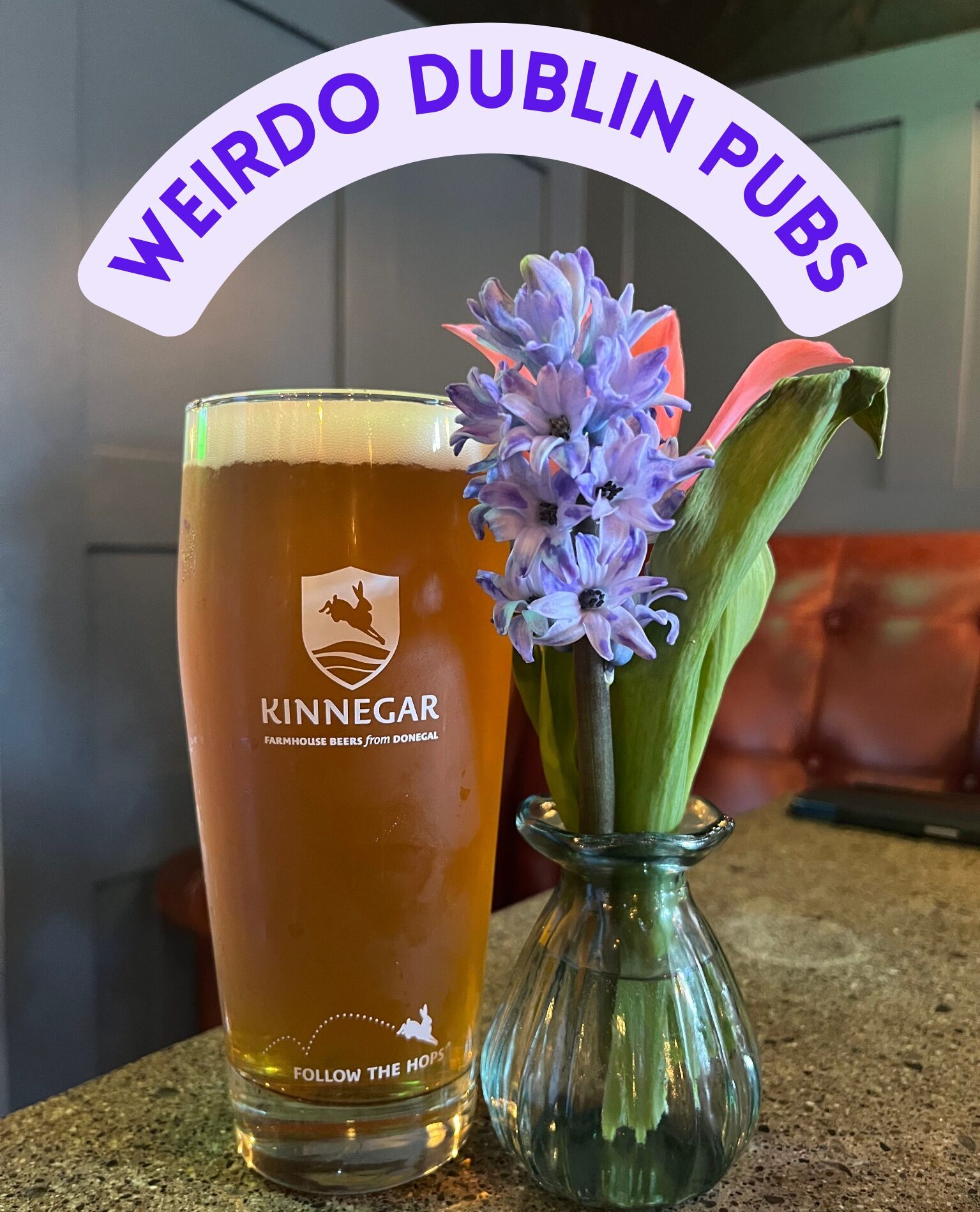
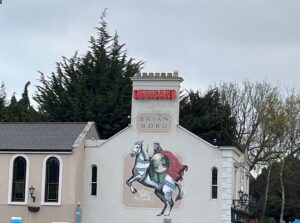
 Last week, we asked whether The Bloody Stream can officially be considered a railway pub. Answer: yes! This week, we are visiting a pub that will eventually (in theory) be disappearing to make way for the proposed MetroLink: Hedigan’s The Brian Boru. But all things planning- and/or transit-related in Dublin take much, much longer than they do in most other places, so you likely have a goodly amount of time to visit the pub in advance.
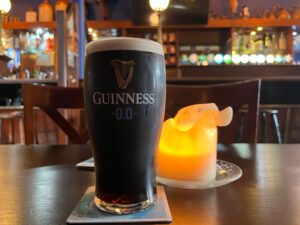
It’s hard to miss it if you’re walking by – the well-kept mural of its namesake king on horseback takes up most of one wall, and while his horse and armour may be a bit more High Victorian Medieval Fantasy than 11th century, well…you probably also don’t believe that Brian Boru ‘camped on this spot‘ before the Battle of Clontarf…and that’s perfectly acceptable. But historical facts need not interfere with the enjoyment of a pleasant bit of neighbourhood art, so we’ll move swiftly inside. There are multiple snugs and seating areas, two bars and even a bright conservatory, so you can get the full dark-wood ‘Irish Pub’ experience or even catch some occasional sun in the spacious beer garden to the rear of the pub. Beer-wise, Little Fawn from The White Hag is the only independent offering, but there’s also Beamish as well as Guinness, plus the useful Guinness 0.0 and Heineken 0.0 options.
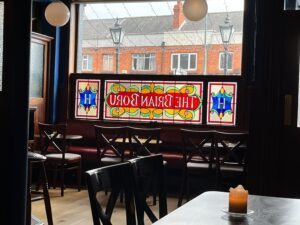 The pub has been here since the 1850s, and in the Hedigan family since 1904, and you can’t miss their name in neon, either. Of course, like so many pubs along this route, it’s name-checked in Ulysses, and has a useful write-up on the NBHS website, where it’s noted that its own house whiskey blend was particularly fine, and that ‘…traditionally held to be the only pub in Ireland that did not run out of whiskey during the Second World War.’ So, there’s a fair amount of history to the place – well over 200 years, all told, and there was likely an earlier pub (or pub-like) business on the spot, too. And yet, it will all have to go for the MetroLink (at some point in the future)…so what does a transit-loving pub nerd do with that information?
 Well, there have been proposals to name the future station here for the pub, possibly including some of the pub’s architectural details. And while the MetroLink wouldn’t be anything on the scale of the Tube, there’s plenty of precedent for naming stations after both extant and long-vanished pubs over on the Neighbouring Island. And it’s not as though this part of Dublin, where Phibsborough turns into Glasnevin, is short of pubs – there are many excellent ones in the area. All the same, it’s a bit of a shame there’s not a good way to incorporate the pub more fully into the eventual station, but we also desperately need real transit to the airport (among other places).
So, I suppose the message is to enjoy this pub while you can…though given how slowly the MetroLink project has gone thus far, you may have a few decades to stop by.
Where: 5 Prospect Rd, Glasnevin, Dublin, D09 PP93
Access from the city centre: Buses 9, 40, 46A, 83, 140; Luas Green Line; 30ish minute walk
Food: Lunch, dinner & kids’ menus
Sport: Football, GAA, rugby, etc…
TVs: Throughout the pub
Music: Indie faves, but also trad sessions and other live gigs
Family-friendliness: Very approachable menu and seating options
Pub-crawl-ability: High – The Bald Eagle, Doyle's Corner, The Boh, The Hut and The Back Page in one direction, with The Botanic, The Gravediggers and The Tolka House in the other…
Local sites of note: Royal Canal, Glasnevin Cemetery, National Botanic Garden, Dalymount Park
Haunted: While not as close to the cemetery as The Gravediggers, surely it’s near enough for someone to craft a good ghost story
Other notes: Can get quite crowded before Bohs games; also pet-friendly
Socials: Instagram, Facebook
 We are back this week with a ‘request pub’ – one that’s much further north than our more common north-of-the-Liffey-but-still-pretty-central stomping grounds. We’re heading out of Dublin City proper to Howth; it’s an easy trip on the DART, but a bit of a pain if, for example, you needed Dublin Bus to deposit you to a nearby spot at a predetermined time. Dublin Bus is not always especially good at the concept of ‘on time’ (but it’s pretty great on ghost buses), so the journey in this general direction involved more taxis than I typically take in a 6-month period, but we got there in the end. Our (eventual) destination was
  I’d recently had an exchange on the socials lamenting the lack of railway station bars in Ireland, and while we have nothing here quite like the small-but-mighty
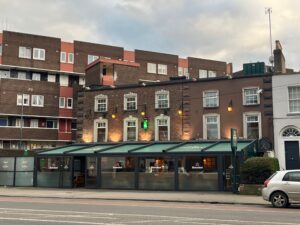
  We enjoyed excellent food and service when we stopped in, which isn’t necessarily a given in some pubs mid-week in the middle of the afternoon (hardly a fruitful time for most), so it was much appreciated. There is outdoor seating as well around both ends of the pub, but we kept to the more dimly-lit interior on a lovely sunny afternoon. Having offspring who actively avoid the sun may be odd to others, but hey, at least their vampiric ways are preventing long-term sun damage, and the pub interior really is lovely, all stone and dark wood.
 A proper ‘Pubs of Croke Park’ roundup is long overdue, and with so many events on this summer, we may as well finally start working on that. While we’ve already covered a few handy ones like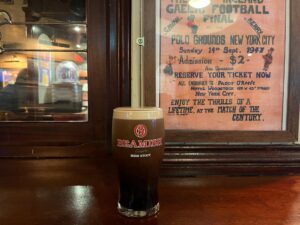
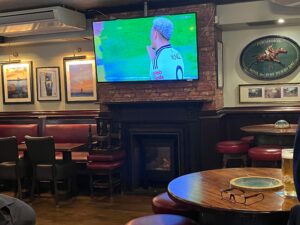 It’s very much a ‘locals’ pub most of the time, but a welcoming one; I’ve had out-of-town guests wind up there and have great chats with the barstaff. No frills, but no pretention, either. If you are looking to pre-game before an event at Croke Park, it’s hard to be better-placed for an easy walk in to the stadium. And, of course, the pub’s name
 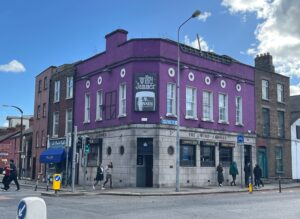 Locals know this, but the visitor to Dublin may not know that horse racing is Kind of a Big Deal. There are endless ads from the various wagering platforms leading up to some of the larger race meetings, and as we’re in the middle of Cheltenham Week*, it seemed appropriate to venture to one of the many Old Man Pubs that draw in the
 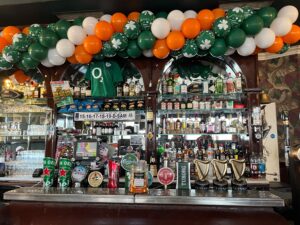 But back to The Wind Jammer: the exterior looks more than a little tired, but once in the door, it’s perhaps surprisingly tidy and well-wallpapered – not to the standard of the much-newer
 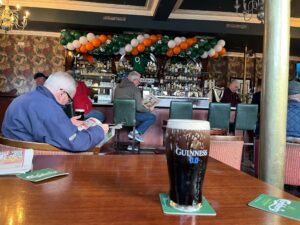 While it’s only a short walk from more ‘hipster’ bars like
 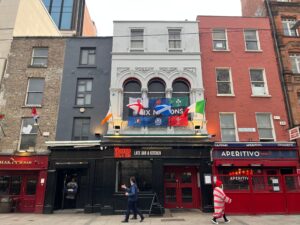 Back in the day – you know, perhaps 3 years ago – this week’s pub was The Porterhouse Central. It was a very handy spot in that you could enjoy a mix of interesting beers from Porterhouse and various guest options, but you avoided
 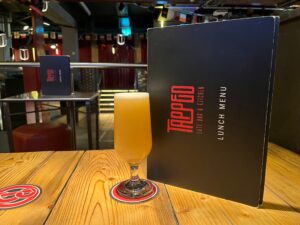 However, I happened to be in the area and had a bit of time after a meeting, so I gave Tapped another try. I’m pleased to say that the interior, while still feeling just slightly too ‘taproom’ has been softened and improved. There is now much more comfortable seating and the lighting is more dialled-in; it feels warmer on the whole. There are screens showing the beer lineup,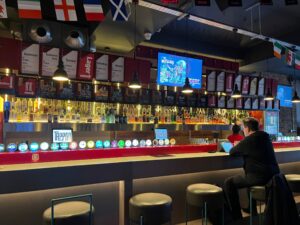
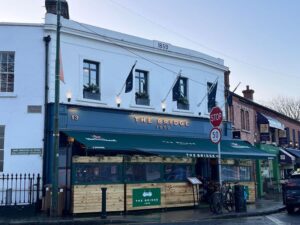 While it may seem that we rarely venture south of the Liffey (true, really), we recently had occasion to be down in our old Ballsbridge stomping grounds, and so returned to
  There has been much local discussion surrounding the launch of
 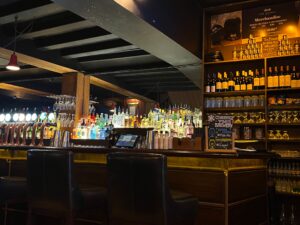 And that may be all well and good for many customers, but these new brews haven’t (mostly) muscled out the usual macro suspects; it’s the ‘good’ beers that have been jettisoned to make space, including – really a loss here – the Pilsner Urquell. Removed from The Bridge’s menu now are Rye River Upstream Pale Ale, Warsteiner lager and, er, Madri. The Madri may be no great loss, but the others are keenly felt (especially if, say, A Friend were really looking forward to a Pilsner Urquell, sighed to make do with a Warsteiner and then realised that the only drinkable lager was Carlsberg). To add insult to injury, the hand-painted panel all about Pilsner Urquell has been partially, but not entirely, covered by a television. Ouch.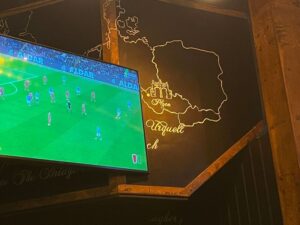
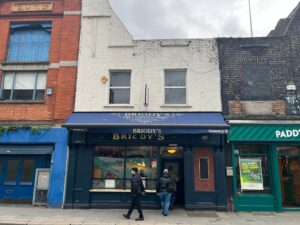 This week’s pub is one that we’ve both been asked to profile repeatedly, and, in nearly equal measure, begged not to reveal it as a secret hidden gem. Is it possible to satisfy both of these audiences? Let’s find out – and so, we venture back to Marlborough Street, home to
 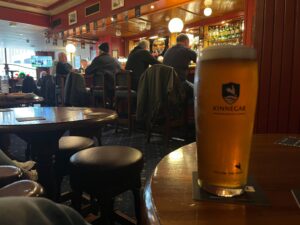 Also unlike many other Old Man Pubs, there was an independent beer option: Kinnegar’s Scraggy Bay. In some pubs that don’t have that kind of turnover for non-Guinness options, they aren’t always as fresh, but there were no such issues here. Guinness was, of course, plentiful, but there were many pints of lager being consumed, too – it is slightly unusual to see Tuborg on one of the taps in a Dublin pub, but I have a soft spot for many Carlsberg products, so it was quite welcome. The décor is, again, by no means fancy, but it’s very well-kept: red and cream paint, lighter wood tones and simple brass lamps on the bar. The crowd was clearly mostly regulars, and although most were deeply invested in the multiple channels of horse racing, there were other long-running conversations, too.
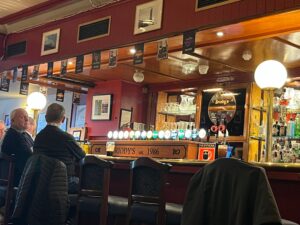 And while it may be true that this is not the cleanest nor most well-kept part of Dublin, that is presumably part of what keeps the tourists away, Georgian architecture notwithstanding. And although some parts of Reddit may be thoroughly convinced that we’re all just waiting to get murdered north of the Liffey, there are signs of positive development; newer pubs like The Morris Bar, just a short walk away, suggest that things are slowly improving. But for a pub like Briody’s that’s been here for over a century in various guises, it seems to be content to keep its current mix of regulars and semi-regulars who drop in whenever they are in town.
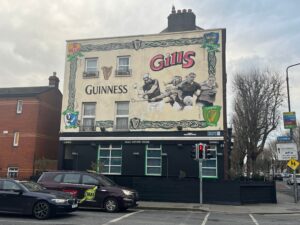 Although I’ve lived an extremely brief walk from James Gill’s Corner House for over 4 years, I have never managed to be going past when it was open – until now. Its ‘regular’ opening hours are nothing of the sort, but that’s part of this pub’s mythology. Gill’s Pub opens when Gill’s Pub decides to do so. So, what’s it like?
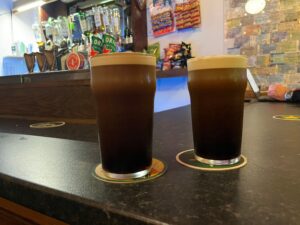 As mentioned, the opening hours are…erratic at best. But if the door is open, you’ll find the walls lined with match-day programs and event posters from previous games and concerts (for those of us who live nearby, we can simply hear everything in the garden – a blessing or a curse, depending on the fixture or artist). But inside there is also the mural of
 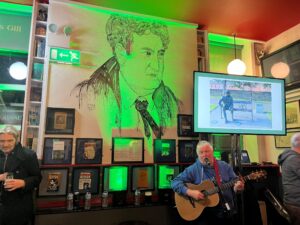 But during Behan’s youth, this area wasn’t merely residential –
  While our stats here show that you seem to be extremely interested in
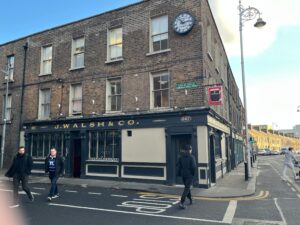
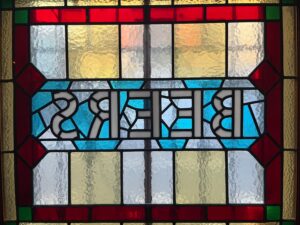
 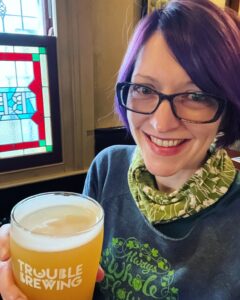 Of course, Walsh’s is far from new, as it’s been trading on this corner since 1826, so it’s coming up on two centuries in business. One wonders if there is to be an epic celebration next year…but back to the pub itself. It’s got a beautiful mix of stained glass and dark wood, cosy nooks and a fantastic snug…really, it’s quite close to the Platonic ideal of a late-19th century Dublin pub (albeit with televisions for the footy), so its recent restoration work has been well-planned and executed. The look and feel is certainly closer to the end of the 19th century than the beginning, but that’s no critique. And while it is best-known for its Guinness, they also serve Beamish, and there are also fresh lines of Trouble’s Ambush and Kinnegar’s Scraggy Bay – it made an ideal stopping-off point for my traditional
  And Walsh’s has another point or two in its favour: it has the full-on Victorian pub splendour, without the crush of tourists you can get at The Long Hall, and it has more variety on offer, drinks-wise, than
  Edit again, mid-April 2025: Welcome to
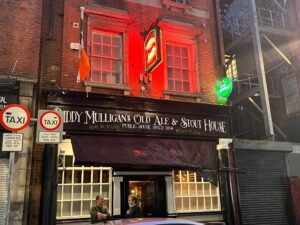
  We’ll come back to his point about the people later, but at first glance, I had the same reaction – why on earth had what looked like an Oirsh pub been dropped into the centre of Dublin? While it’s true that there are Dublin pubs that cater more to the tourist trade than to locals (and not just in Temple Bar) that do dip into a more stereotypical ‘Irish pub’ feel, to tip over into what we might call Full Oirish seemed, well, unseemly. Unnecessary. Just a bit, well, naff.
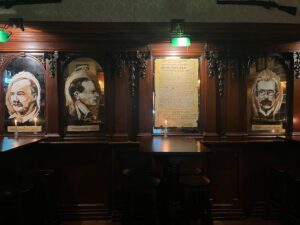
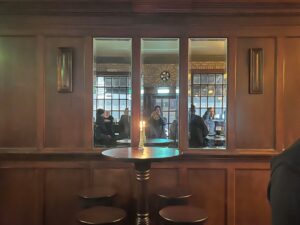 While it’s still a small spot, the dark wood and low lighting add to the cosy feel, and the interior décor is very much ‘Easter Rising’ themed with images of the leaders around the pub, it doesn’t veer off into a theme park feel; indeed, given that the pub is steps away from the GPO, if the interior matched the exterior sign, it could easily career rapidly into the realm of the offensive. But – and here’s the thing – it does not! It’s quite nice! It includes portraits of many of the women involved – something especially notable if, like me, you’ve recently watched ‘Michael Collins’ for the first and only time, and wondered where the women were…but I digress.